

Exercise Stress Test – Getwell Health System
An Exercise Stress Test (also known as a treadmill test or cardiac stress test) is a diagnostic evaluation used to assess how your heart functions during physical activity. Since exercise makes your heart work harder and pump faster, this test helps identify possible heart-related issues that may not appear at rest.
At Getwell Health System, our stress testing is conducted by trained medical professionals using advanced monitoring technology to ensure accurate, reliable, and safe results.
Why Is the Test Done?
Your doctor may recommend an Exercise Stress Test to:
Evaluate symptoms like chest pain, shortness of breath, dizziness, or palpitations
Detect coronary artery disease (CAD)
Assess heart rhythm abnormalities
Measure exercise tolerance and heart performance
Monitor the effectiveness of cardiac treatments or procedures
Determine safe levels of exercise for cardiac rehabilitation programs
How the Test Works
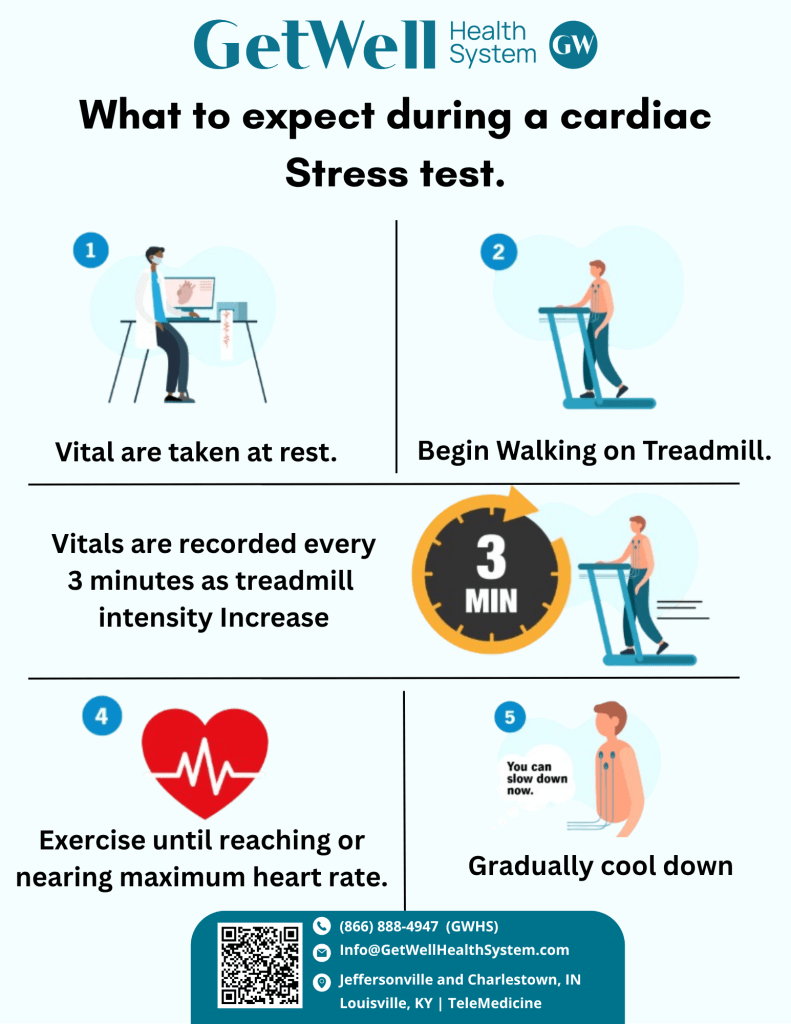
The test involves walking on a treadmill or pedaling a stationary bike while your heart activity is monitored.
Step-by-Step Process:
Preparation:
Your technician attaches electrodes to your chest to record heart activity.
Baseline heart rate and blood pressure are measured.
Exercise Phase:
You begin walking or cycling at a slow pace.
The intensity gradually increases to raise your heart rate.
Continuous ECG monitoring checks for rhythm changes or signs of reduced blood flow.
Cool-Down & Monitoring:
After completing the exercise, you cool down while your heart rate and blood pressure return to normal.
The doctor analyzes your results to detect any abnormalities.
What Does the Test Detect?
An Exercise Stress Test can help diagnose:
Blocked or narrowed arteries
Irregular heart rhythms (arrhythmias)
Poor blood flow to the heart muscle
Exercise-induced symptoms
Overall cardiovascular fitness
How to Prepare for the Test
To ensure accurate results, please follow these guidelines:
Wear comfortable walking shoes and loose-fitting clothing
Avoid eating heavy meals for 2–3 hours before the test
Do not consume caffeine on the day of the test
Take medications only as advised by your physician
Bring a list of current medicines and health conditions
Who Should Not Take the Test?
The test may not be suitable for individuals with:
Severe heart conditions
Uncontrolled blood pressure
Acute illness or infections
Recent heart attack (unless cleared by a cardiologist)
Our doctors will review your medical history to ensure the test is safe for you.
Benefits of an Exercise Stress Test at Getwell Health System
Non-invasive and safe
Quick insights into heart performance
Helps detect early signs of heart disease
Supports diagnosis and treatment planning
Conducted by certified medical professionals
Accurate monitoring with modern diagnostic equipment